
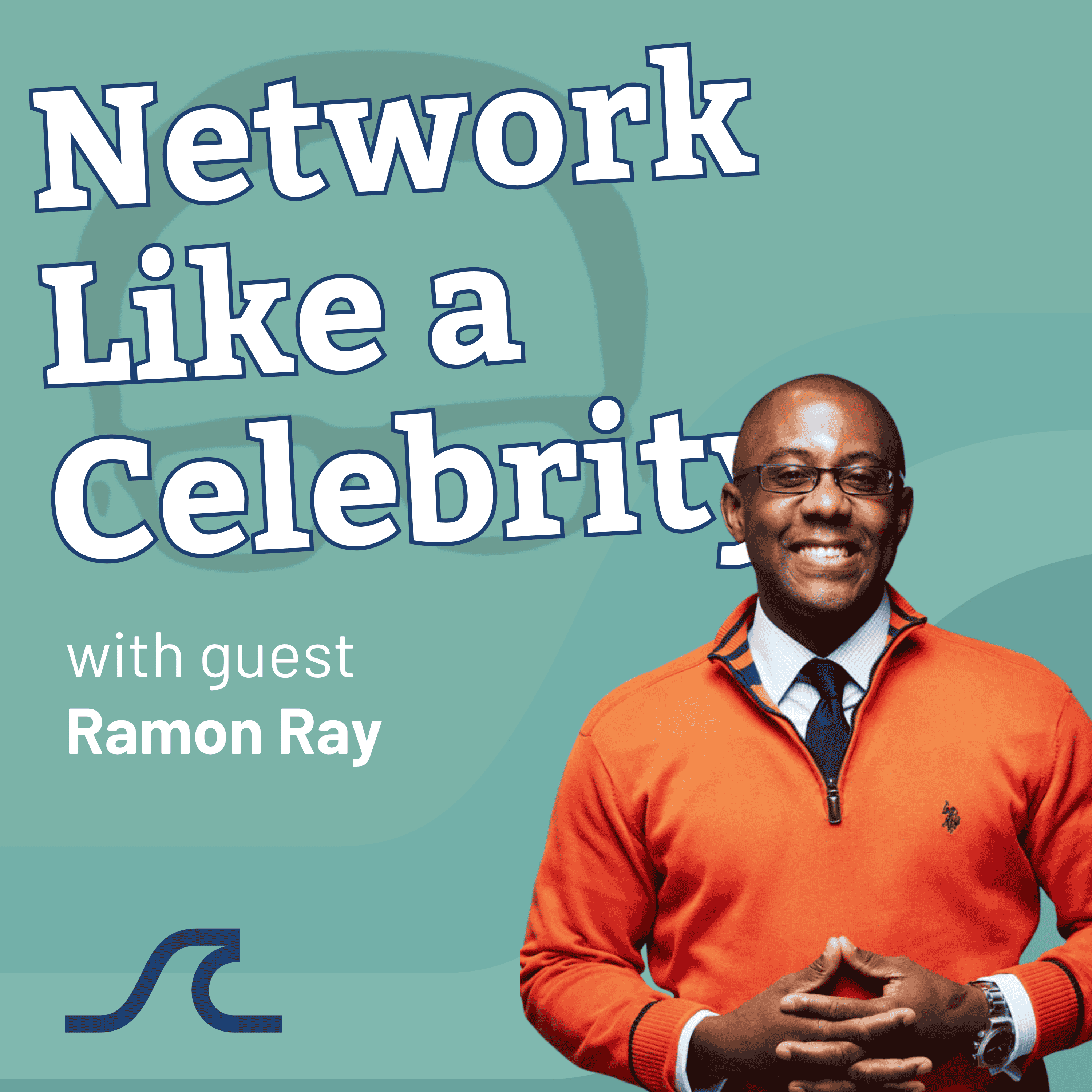
Episode 640
Ramon Ray argues that becoming a celebrity CEO isn't about fame—it's about being well-known to the people who matter. He built and sold three media companies by focusing on consistent value, authentic relationships, and showing up for the right audience. When the pandemic shut down his speaking business, his personal brand became his lifeline. Companies like Dell and Salesforce still had marketing budgets and needed a trusted voice, so Ray pivoted to virtual summits and kept revenue flowing. His case is that your personal brand is not vanity, it's a business asset that can carry you through pivots and crises.
Ray walks through the mechanics of building visibility: get attention from the right customer, build trust through consistent education, and let sales follow naturally. He stresses that consistency matters more than perfection. Showing up every day, saying a version of the same message, and being the human face of your company creates trust. He also credits his business partners for balancing his big ideas with caution and structure. Without Marion Banker's accounting discipline, his event business would have collapsed under his own enthusiasm.
Ray's route to the White House involved years of service and visibility in the small business media space. He didn't cold-call his way in. Google and the Obama administration wanted someone with energy, the right questions, and an existing audience. That interview happened because Ray had been building his brand for years. The lesson is that recognition follows value, and opportunities open when you're already known for serving a specific community.
Key takeaways
- Your personal brand is a business asset that can carry you through crises and pivots when corporate channels dry up.
- Build trust through consistent education—show up every day with a version of the same message for the right audience.
- Find complementary partners who balance your weaknesses, not carbon copies of yourself.
- Recognition follows years of serving a specific community with integrity, not cold outreach or luck.
- Start by being a guest on others' platforms before you try to create your own event or show.
Guest
Ramon Ray is a five-time entrepreneur who built and sold three companies. He founded Smart Hustle Media, served as Entrepreneur in Residence at Oracle NetSuite, and has interviewed President Obama and shared stages with Simon Sinek, Seth Godin, and Gary Vaynerchuk. He is the author of The Celebrity CEO. celebrityceo.com
In this episode
- 00:00Introduction and guest welcome
- 04:01Rebuilding from zero with a hundred dollars
- 08:22How Ramon interviewed President Obama
- 12:08Building and selling three media companies
- 21:29Finding complementary business partners
- 28:59Pivoting to virtual summits during COVID
- 39:05Bringing energy without being fake
- 45:53Building awareness, trust, and sales
Read the full transcript
Introduction and guest welcome
00:00Bill Gallagher: Have you ever had a week when you're completely slammed, but somehow nothing actually moved? Is this one of those weeks? That's not really a time problem. It's a busyness habit problem. My new book, Busy Is Broken: Do Less, Scale More, is all about growing by doing less, not more. Read or listen to a sample chapter over at busyisbroken.com. That's busyisbroken.com. It's also on Amazon and other booksellers.
00:34Bill Gallagher: There it is again. We are back. Hey, what if your customers lined up to buy before you ever asked for the sale? What if you were that magnetic? Ramon Ray talks in The Celebrity CEO about being a magnetic personal brand that connects community, turns your fans into customers and into revenue and all that. That's what we're getting into today. You know, I always like the music at the beginning of our show. It's recorded, made for me. But this morning, I've been listening to faster music. And as I'm getting ready and doing stuff, I had on this higher beat house music going on around the house in the studio. And now this feels really slow to me.
01:35Bill Gallagher: Hey everybody, Bill Gallagher, Scaling Coach and host of the Scaling Up Business Podcast. Come to you every week with something to do with growing your business and the leadership required to get you there. So we help you with the strategy, the people, the execution, the cash. We have more than six hundred and forty shows now, I think, at scalingcoach.com or wherever you're getting this, right? So Spotify, Apple Podcasts, Twitter, YouTube, et cetera. We send it out everywhere. So like and subscribe wherever you are, turn on your notifications, get them every week. And if you want to do one of our monthly workshops on Scaling Up, take a dive into it, get a little more personal interaction with me and others in beginning the Scaling Up journey, go to scalingcoach.com where you'll find info on our workshops and our tools and stuff like that, plus all the shows are all there. So get it wherever you are now or go to scalingcoach.com and you'll get all that more.
02:31Bill Gallagher: All right. Listen, our guest today is Ramon Ray. You know, for beginning for me, he was Raymond, but he's Ramon. And you should know, five-time serial entrepreneur, built and sold three companies. He's founder of Smart Hustle Media, Entrepreneur in Residence, Oracle NetSuite, author of five books. The Celebrity CEO is kind of our focus for today. He's interviewed Barack Obama in the White House for Google Hangout, and he shared stages with people like Simon Sinek, Seth Godin, Gary V, Damon John. You may have heard of some of those folks. Anyway, Ramon, welcome to the show.
03:07Ramon Ray: Hey, thank you so much, Bill. Thanks for having me with you today. I'm excited to be here. I love your music. I love the Scaling Coach website. Love everything you bring. I even love your glasses. It looks very smart and snazzy, James Bond-ish, smart, and friendly person who is very smart type. So thank you, Bill, for having me. Glad to be here on your show. Good morning.
03:33Bill Gallagher: Okay. Here's a funny aside since you brought it up. I had been at some conferences, events recently where I was walking around without the glasses on. Because in truth, right, the glasses are now like I had laser on my eyes so I can see distance, but I can't read because I'm old. Right? So now I wear glasses anytime I'm on screen or on camera because I need them to see the clock. I can't read the screen in front of my face or even sometimes my watch, right, without the glasses, but I don't really need them for distance. So I could walk around in a crowd without the glasses on and people are like, 'I feel like I know you from somewhere.' And I'm like, 'Does this help?' And I put on the glasses. They're like, 'Oh, yeah. The scaling thing. That's right.'
Rebuilding from zero with a hundred dollars
04:08Ramon Ray: That's right. That's right. No, glasses sometimes I take my glasses off, Bill, or I do photo shoots or whatever. I just don't know, I have little black marks there, but it's part of me. So I get you. The Ramon Ray that people know, it's my glasses on. So, you know, what can I say? But looks good. It fits you well.
04:32Bill Gallagher: Now, I know you have a ton of followers online. And I think people know you have just a fantastic presence. You have an energy, right? And you let it out and it's very clear, like you let it out in service of a message, in service of human beings, of being a contribution of a certain kind of life. But imagine that you woke up tomorrow and every trace of your online footprint, all your followers, your videos, your articles was gone. But you had your phone and you got a hundred dollars in cash. What would you do in the next twenty-four hours to start rebuilding Ramon Ray, celebrity CEO from zero? What's your opening move?
05:16Ramon Ray: I would probably call two or three of my closest friends and ask them how I could help build their businesses for a fast path to cash. Like, say, Bill, you know, if that happened to me, I'd say, 'Bill, listen. I've lost everything. Can I work with you, Bill, for three to six months to build what you're doing? Build Scaling Coach. Can I do that?' Let's assume you'd say, 'Yes. Sure. You want to work with me? Do this.' And then I get cash, get back on my feet, and I'd be open and say, 'Hey. Listen. Let me build it.' And then as I get back on my feet, I'll return that. Maybe we do a JV. So that's, since you asked me the question, something like that I'd do to help others who I know who are already established since I have nothing and they trust me. And then I'd work my way back up. And then it would be, 'Hey. I'm Ramon Ray. And also, if you're looking for great coaching, see scalingcoach.com.' So that's what I would do.
05:59Bill Gallagher: You know, I love the whole, like, the fundamental life philosophy behind that. Right? Be of service, create value, be of contribution, not 'I'm going to pose in the nude and post that on Instagram.'
06:11Ramon Ray: I'm going to, like, because then I'd have too many followers. I would crash the servers, Bill. You would.
06:21Bill Gallagher: Would break the internet, right, for sure. As we all throw our phones in the sea. There's something cool about that. Like, go be a contribution. I'm going to create some value for someone, and then I'm going to leverage that and build on that and, like, do something good in the world. And I think, like, when I think about an entrepreneur starting out, a new coach joining our world, that kind of thing, I'm like, we got to work with what you already have. What's your existing network? Who loves you already? Who have you worked with? Who trusts you? Right? Let's go and expand that into this new realm. So not leave that behind and go into a new world, but bring that with you.
06:55Ramon Ray: Right. It doesn't make sense, Bill. I don't know if you watched, not Undercover Boss, but the ones where they had some of the celebrity people had to start from scratch with that very thing, a hundred dollars and a truck, I think, or something, Discovery Channel or something. But that's what they kind of did. They'd go to the church, start from the ground. 'Hey. Listen. I have nothing. If I help lead your choir, could you just feed me and give me a bed?' You know? And they work their way up. They're like, 'Hey, restaurant owner. I noticed you're down servers. Why don't I lead your server team for six months? But can you feed me? Can you pay me just a little bit and let me sleep somewhere?' Then they started from scratch.
07:37Bill Gallagher: Well, we're going to, as we do, we're going to share some of the stories that brought you here and that lead to the—
07:44Bill Gallagher: book, and then we'll talk about it at length. But I think I've had many friends who have served in both political parties in the White House for one president or another on both sides of things. And I've only visited the West Wing once, during the Obama administration. I had some friends who served several terms with him, and I even coached one of the people on the staff some years ago. So I'd love to hear how you beat out everybody and got to grill President Obama. Tell us that story.
How Ramon interviewed President Obama
08:22Ramon Ray: Sure, absolutely. Google, and this would be in his first presidency. I guess my dates are fuzzy, but you can connect the dots. Whenever Google Hangouts was gaining in popularity and, I guess, trying to beat Skype, that era. And I'm sure there was some, as you know, Bill, joint venture or some partnership between the White House and the government and Google, and they had a major contest across the USA. It's probably still online. Some people can Google it or AI it, whatever we call it nowadays. And it's my understanding that—I have it in my memory, in my head for some reason—that about 300,000 people applied for this contest to interview President Obama. And it wasn't really a contest because you had to be vetted and go through different layers of things. Not security, but I guess they wanted to have the right person. And so I applied. Lo and behold, I get a call—maybe an email comes through—hey, a producer of this experience with the president wants to interview. That was layer one. So they asked my politics, this, that, and the other. I went to level two, grilled again and again. And my feeling, Bill, you know, having been some years later and knowing a little bit about production, they probably wanted a mix. What's the question? Is this going to be the right question weighing this against what other people have already asked him? Number two, does he have the energy? You know, we want a mix of boring people, interesting people, smart people, whatever, a nice mix of people. So lo and behold, I was picked, and I remember it. I think, Bill, this would have been when ISDN lines, still the dial-up modem-ish era, that time frame. We didn't have even the strong WiFi and all that we have today. So I had to move my couch around, move my chair around, stacks of books and my video camera, all these things. And I just sat still—I can't shake any of this so it doesn't fall. And lo and behold, there's President Barack Obama. "Hey, Ramon." And that's still on YouTube to this day.
10:16Bill Gallagher: That's so awesome. You know, it's a powerful experience. Whatever your political party persuasion, whatever group that you favor, whoever you've idolized, like, it's a powerful, powerful thing. I have a very dear friend who worked for Reagan on his traveling team and helped set up events. And like, it shaped her life. You know? She meets people like the Pope, John Paul, and Lech Wałęsa and, you know, like major world figures and that kind of thing. And so much happens in that environment. I have people who served in the Bush White House. I visited during the Obama years as well. It's such a—it like takes everything up a notch. I went to many schools growing up, and one of the schools I went to was Punahou in Hawaii, where Obama went. And he was about two years ahead of me. And to be honest, I wish I remembered him. I wish, like, just—
11:19Ramon Ray: One of many faces, you know. Who I remember outside of who you knew. Two years is kind of a lot when you're in that.
11:26Bill Gallagher: Yeah. Yeah. And actually, he would have been in a different part of campus at that point. He would have been in the ninth grade. I would have been in the seventh grade. So he'd have been in a different part. Who I remember from that year, speaking of celebrity, and who I sat next to all day one day in the taping of a TV sports special was Bruce Jenner.
11:48Ramon Ray: Okay, yeah. Yeah. Caitlyn. Yeah.
11:52Bill Gallagher: Like, major. Like, it was CBS World of Sports or ABC Sports or something like that. And they had the group of the track team sitting around him while he was on camera to create a little color. So you've built a whole bunch of different businesses. Talk about being a builder and seller of businesses. Tell us about, I don't know, Small Business Tech.com, like that kind of thing.
Building and selling three media companies
12:17Ramon Ray: Yeah. I'd love to. I wanted to go back to that thing about the person, you know, who was the advance team. Those are such fun jobs. You get to be behind the scenes. And I, you know, when I worked at the United Nations for a period of time, I wasn't doing that. But every year, I would volunteer for like the protocol, and you know, the person—you were like the human path. Like, if Bill wanted to come to the White House, you would be the advance and the "what is he going to eat? Where is he going to use the bathroom? Where is he going to go? Are the cameras in the right place?" And then finally, President Bill comes in, you know? So it's fun doing those behind-the-scenes things. It was just a few days. It wasn't my day job, but a few days to be behind the scenes, like Sam working with you, Bill. "Wow. I get to be the advance."
12:58Bill Gallagher: Well, you know what? I'll say on that, because it goes to the celebrity topic and building your thing. One of the times I went to study and learn from somebody who spoke on bigger stages than me. And I said, I want to learn from you. And she said, "Okay." So it wasn't that huge of an event. I want to say it was about a thousand people over, but it was several days. Holding attention from a thousand people for several days is a big deal.
13:28Ramon Ray: It is.
13:28Bill Gallagher: And she's like, "Here's what I want you to do. Your job is just to manage me in the background. So you carry my lipstick. You will help intercede when everybody wants to talk to me and I need to get to the bathroom. You will help—just know, think about what I'm dealing with and help me take care of myself so that I can just be with people." And I'm like, "Really?" Fascinating. And then at the end she's like, "What did you notice? You know, like, what did you learn just by working next to me? How did you level up?" And it's funny, I would say even thinking back to that, I don't remember what I said in the moment, but I do remember, like, with time, two things. One is to be generous, to give to others. You also have to take care of yourself. Like, put on your own oxygen mask first. So if I'm going to speak the next day, I have to eat well, sleep well. I have to do things that make me feel not stingy, that make me feel generous, that, you know, like, "Okay, I'm taken care of. I'm ready to give." And when I'm done, I also have to do things to restore. Like, "Okay. I need some me time now. I've just been generous."
14:41Ramon Ray: Yes. That is so true. You're right. If you don't do it, you can't, you know, it doesn't—You know, this morning, I had a good breakfast, my daily routines and stretched. I don't think I worked out yet. I forgot about that, but I did stretch. And so here I am.
14:50Bill Gallagher: But the other thing I noticed in that was, like, you don't connect to a thousand people. You connect to one at a time. And you'll notice this when somebody like Tony Robbins does this powerfully because he'll go pretty emotional with somebody. It'll be, you know, this whole room. And then he picks one person. He talks to them. He's like, how long has this been going on? Tell me about that. He speaks in a way that includes everyone, right? That welcomes everyone. But it's an intimate conversation. I'm talking to you in your seat with what you're dealing with. Like, how long have you carried this pain? Right? And that's a really powerful lesson. Right? Like, you're both speaking to everyone, but really one of you. You've got to pick and connect with one person.
15:38Ramon Ray: Correct. You're right. And as you know, as a speaker and etcetera, that's the best way to make the connection. I will answer the question you asked about selling the companies, but I think that is the one key of it—making a connection. You know, again, you and I, we reach thousands of people. We serve people and have these email lists and social. It's all important, and I'm grateful for that. But I think, Bill, this is important: that one to one, getting to know Bill just a bit better, Bill getting to know Ramon just a bit better. You build relationships and ideally, there's something of value and I say, hey, Bill, I'd like to buy that from you, or Bill, can I buy it from you, or we do something bigger together transactionally that benefits us both.
16:13Bill Gallagher: So I can dive into those now if you like, but thank you for letting me go back a bit on the serving other part. No, I think it's awesome. Like, look, we're just having a conversation and connecting the dots around loosely around the topic. In this case, your book. But I think there's so much like it's so human. When I went to visit, we took our son and his friend at the time and went to tour the West Wing. And my sponsor host had this very high political policy job, and he was the son of my mentor for a long time. And I'm like, so what does that mean? What do you actually do? And he's like, oh, he's like, listen, I figure out how to get people in and out of the White House and how to take care of people, mostly from, you know, the House and Senate. Right. And he's like, so that means like, maybe I'm taking this senator through this part. And I know that we have this other person who he's in a public spat with right now. He's got a personal beef. So I will work to make sure that they don't have to make eye contact. Or if they do, that they make eye contact. Or if the opposing party's, you know, speaker or whatever has his high school friends who are in town, we'll take them to do that because we don't need to make it any worse than it already is. And he said the biggest lesson of all of this is that it's human beings. Right? And human beings have egos and feelings and like, and we're just trying to make it as smooth as possible. Not make it any worse than it already is.
17:55Ramon Ray: No, that is so true. That is so true. Human beings. And they're really human issues. Right? One of my keynote talks is human connections in a digital world. Even though I talk about AI and tech and all those cool things. But I find that resonates with people just to talk about the humanity that we're all around for sure.
18:14Bill Gallagher: So building and selling companies. What's the celebrity CEO have to do with any of that? Tell us your stories.
18:26Ramon Ray: Absolutely. Yes. So the three companies that I sold, one was smallbiztechnology.com. The other one was Small Business Summit, and the most recent one, I think it was the most recent, was smarthustle.com. And all these were niche media companies. And for the sake of those listening, you know, we see on the front covers of the New York Times, Wall Street Journal, Bloomberg, CNBC, billion dollar, multimillion dollar transactions. And I like to tell people, these were not that. I built brands and companies of hundreds of thousands of dollars. That's my specialty, what I do, and I've done it successfully, sold three of them. So smallbiztechnology.com was a blog in essence. It was media podcast and other things, but a blog in essence that grew and had thousands and thousands of page views, thousands and thousands of visitors. And somebody else said, hey, Ramon. We can take this and grow bigger. And they have. It still exists today. You can go—I don't own it, but you can go to the domain, smallbiztechnology.com. It's still alive and running quite well. And so that was one thing I sold, smallbiztechnology.com after just buying the domain and growing it. Then the second was my event business called the Small Business Summit. Shout out to my partner at the time. Her name was Marion Banker. And, just to give the visual for those listening or, you know, or watching, she was a thin white woman. And I'm this thin, you know, handsome black guy, and she was older by, I hope she's not listening, I'd say Bill ten, twenty years, maybe older woman. You know, why isn't in her years? But we made such a great team. She had an accounting background. She was more methodical, more cautious, more thoughtful. I was the let's race forward the marketing guy. Let's have sparkles metaphorically as it were. You know, that was my specialty. And I was good at selling. So we made a good team because I'd bring in the money kinda like mama and daddy or something or a good partnership. I'd make the sales and she would cautiously, we work together to grow it. So we did a big event in New York City for maybe ten years or so called Small Business Summit, and I sold that to a fellow blogger who was doing events as well. And then the third one was smarthustle.com, and that was recently. I started that domain in 2015, did a number of events around that brand, podcast, you know, same playbook. Right? My specialty is kind of media. And then Zen Business, which some of your audience may know Mark Cuban sits on the board of that company. They kind of—nothing is blind. You know, nothing is cold call per se. They knew me, and, you know, I'm in the media space. But somebody reached out and said, hey, Ramon. We like what you're doing, and we wanna do this. So we can either just do it ourselves, which will take us some time and, you know, we can do it ourselves. This is way before AI was popular. And we can just buy you out. And I said, great. Send me some good money, and it's all yours. They did. So those are my three exits. Smarthustle.com, smallbiztechnology.com, and Small Business Summit.
21:07Bill Gallagher: You know, it's funny how, like, there could be value in any number of different ways. I helped somebody buy a domain name years ago, and they were not doing anything with it. It was like a hobby thing, but it ended up selling for quite a bit, not quite retirement money, but very significant life changing money for this person. So value could show up in a lot of different ways. But I think the other thing that strikes me about that is the importance of knowing your part and finding not more characters like yourself, but contrasting partners, both from a structural technical standpoint, like who does what, but also like from who are the players in this scene, right? Like let's not all have carbon copies.
Finding complementary business partners
21:55Bill Gallagher: Time and again, when you talk to entrepreneurs, you're like, I just need to clone myself. Like, that's the worst idea I've ever heard, and I hear it all the time. I need to clone myself. No, you don't. You need to find complementary people. We don't want to find another like you. You'd clash with yourself.
22:15Ramon Ray: Exactly. You would. You'd be arguing with yourself all day. But you're right, Bill. I mean, especially as you grow, I'm so glad, to your point, that I had her, Marion Banker. We were so different. In fact, Bill, when we started it, I remember taking my credit card to the Roosevelt Hotel. Some people may know it near Grand Central in New York City. And, you know, I saw others do events and, you know, you apply for the event, you get rejected, not because anything nefarious, just so many people. I was like, I'm tired of this racket. It can't be that hard to do an event. It is, but the playbook's in front of us. I took my credit card, rented a room, got some catering, lights, camera, action. And she was so cautious, Bill, like, not sure if we're going to do this, Ramon. Are you sure? But together, we made a great team because I needed, in the years to come, I needed her caution. She saved us money. She made sure we didn't go into a hole of debt. So her cautious approach was really good, but she needed me because she probably never would have started if I wouldn't have kicked her in the tush in a respectful way and had her start.
23:13Bill Gallagher: Pulling each other up is a fundamental thing that we need to do. And it's funny because I used to lead these multi-month workshops. I would meet every week. We'd do some intensive things like that, and I would go on for like four months typically. And I noticed that I would have business partners, I would have life partners, I would have friends, things like that. One of the worst pairs that I would have in any workshop was a romantic couple, any romantic couple. And I noticed this phenomenon, and then I look in the mirror and I'm like, oh, my wife and I do that sometimes for each other. And I think a lot of people do. What is it that we do? What's the move? Some of the first people to quit a program like that, to drop out or to skip a session, will be a husband and wife or a same-sex couple. A couple will often, like, as part of our soothing and taking care of each other, someone will say, I don't really feel like it tonight, honey. And then it's, that's okay, let's just stay home and watch TV. That's okay, let's just order Chinese. And that kind of thing that we do is not pushing each other to be our best self. It's providing the comfort, the escape for the partner. And we don't do that as much in, like, business partnerships. It's a unique phenomenon of family and some close friends and some romantic partners. Oh, it's okay, you're doing a lot. Like, you could have this, and I'm your partner in taking a break or getting away from the thing. And I noticed that, like, my wife and I do that sometimes for each other, probably more often than we do the opposite. But every now and then, I'll be wanting to sort of fake out on something, and my wife will be like, nuh-uh. Like, this is your moment. You step up. Like, okay. Like, they're counting on you. Like, let's go. This is not a moment to fake a sickness or… And we need, and like you said, I think you said, scaling up, pulling up, helping each other grow.
25:21Ramon Ray: You're right. I mean, I think that partnership, to your point, like couples, instead of pulling each other down, the best we can do is pull each other up. Me and my wife are like that. Thirty-one years of marriage, you know, when she's down and not feeling well, I wish I did it more, but my job and my responsibility, Bill, as you're saying, is to pull her up and help her in the same way. And I think as business partners, I don't have a direct business partner today in certain things I'm doing. I want one, but Marion Banker with building the event business, Jamie Freyer, another name I can call. Jamie Freyer, I'll call her name, and she's quite alive and well, and we still work together. She helped me build SmartHustle.com. I give her full credit. Sure, I was the brains behind it, the energy behind it, the face around it, but again, when I was stuck or when I was, she's like, Ramon, come on, let's go. Did you get that funnel done, or did you call that sponsor? And so she would be very helpful with that. So as I'm thinking back, Bill, thank you. You're taking me down a good memory lane.
26:12Bill Gallagher: There's been a number of people in my life who helped me level up or scale up, like you said, for sure. You know what? I think it's not like as a couple we pull each other down. It's just like we provide an escape. We're like, it's okay. It's not like, oh, you're not good enough to go to that thing tonight. It's kind of like, yeah, it's okay to come up a little short. I forgive you. I love you anyway. And I think that that's the phenomenon. So a great partnership, you're going to push each other as much as you provide the comfort. So comfort, but also, you got this, you could do this. I think about, you know, I get paid to give advice and coaching and examples and help work people work through things and whatever. But a huge amount of time, knowing somebody's situation, their challenge, I simply say, you know what? You got this. I've worked with a lot of people like that who were dumber than you. You could do this.
27:17Ramon Ray: And, Bill, I bet that's all they need. Sometimes they just need a pat on the back. I remember one of my bosses at Keap, Keap, formerly Infusionsoft. They were recently bought by Thryv some months ago. But one of my bosses, Kathy Sachs, saying your name, Kathy Sachs, and she's quite well and thriving on LinkedIn and all those things. And one day, Bill, similar to kind of how you said, different wording, but she said, Ramon, I don't have the answer, but I trust you'll figure it out. She was an executive. And when she said that, it lit, what is it? You know, like feelings of trust. It made me feel just amazing that she put that trust in me. So I love what you said, Bill.
27:49Bill Gallagher: Yeah. You know, it's funny. I remember, so we have a two-year-old granddaughter now. And my son's 28. And I remember, like, the first couple nights and the first little bit, like, he was just unbelievably exhausted, overwhelmed, like, oh, like a new dad. And he was quite beside himself, especially on the first night. And I'm like, listen, you want to remember this. You'll get this intellectually. Like, billions and billions and billions of people far less bright and far less resourced than you have dealt with this. You got this. Don't forget. You could do that. You don't know how yet because you're doing something for the first time, but I promise you, this is going to be okay. And just knowing that something is okay will give you the room to keep at it, to not quit. An enormous number of times, like, companies win because they simply refuse to quit. Persistence. And then after everything else, then something showed up, and they could lean into that opportunity of that moment.
28:40Ramon Ray: That's right. That's exactly right.
Pivoting to virtual summits during COVID
28:59Bill Gallagher: Speaking of leaning into opportunities and moments, talk about bringing personal, the CEO celebrity, your personal energy and presence to challenges like COVID and the work that you did producing virtual summits and bringing together Dell, Salesforce, etcetera.
29:07Ramon Ray: Yeah, I think that's a great thing to talk about. Thank you for that. Thank you for letting me recount that. Your research is impeccable, you and your team, Bill. I like this show. I'll give ChatGPT… yes. Okay, well, okay. And that's it. That's even, I'm even more honored. That's a whole other topic. Some people are afraid of it, but I've asked people more and more, hey, when you've invited me to speak, how did you hear it? And they said AI. So I'm happy that AI has indexed us and helps us do that. But indeed, what I would say, Bill, is that also, how I got the moniker Celebrity CEO and things like this, people kept asking me. I've been blessed to do a few things and be, whether it's the White House or be in the Wall Street Journal, Fox Business, MSNBC, things like this that I've been a part of. And people said, Ramon, how did you do it? And it's about personal branding. And I believe I coined the term Celebrity CEO. Everybody doesn't have to be Cardi B or President Trump or President Obama or President Biden, whoever you may want to be, but everybody can be the celebrity, can be well known in their industry, to their niche, as you are, Bill, as I hope by God's grace to some degree. So that's what that means is to set that context of being the Celebrity CEO. Doesn't have to mean wildly famous. And even somebody who is, some people may know the name Seth Godin, the kind of the father of modern day permission marketing. He reminded me, Ramon, I'm not known by most people in the world. MrBeast with his 400 million followers is not known by most people in the world. But the bottom line of this, what happened, this personal branding site, when COVID came about in 2020 and the world was metaphorically and literally shut down, Bill, I'm a speaker. I have to fly for a living for at least some of my income, and I'm like, what do I do? Because I'm not a coach. I don't do consulting per se. It's not the biggest part of what I do. I work with brands and I speak and etcetera. So I'm like, what do I do? I'm praying, I'm talking to my wife. I'm like, but you know what? It's going to be okay. Because I'm sure South by Southwest, this big event with thousands of people in Austin, Texas, that's not going away. Maybe CES or whatever the big event was happening right after CES. I was like, I'm sure it's going to be okay. I refreshed the New York Times homepage, Bill. I won't forget it. Think it was on a Friday, maybe I think would have been May 2020 or March. I can't remember the dates. But it said South by Southwest, this big tech event, is closed. It's canceled. Then I knew from my little sphere of the world, the world was ending. If South by Southwest is canceled, it's big time. So bottom line, Bill, to cut to the chase, is that what I did was, going back to trust, the relationships I had, went back to Dell, Microsoft, Salesforce, those three companies, and I think one was AT&T as well. And I said, I'm doing an event. Doing an online event. This is still, even though it's five years ago, to be, we all weren't online as much today as we were then. There's a hockey stick growth. And Bill, they had a need as well.
32:03Ramon Ray: Yeah, 100%. Right? Yeah, they had a need as well. And that was to keep marketing and keep doing what they're doing. They still had budgets, but COVID changed how they're going to use it. And that really kind of fed my family, me doing one or two online summits called Survive and Thrive Summit at the time, and they paid some good money to sponsor it, and I was able to live. So that's the story of how I went with contacts, thought, quote unquote, outside the box, did something online, brought together thousands of people who still knew the brand Ramon Ray, who knew the personal brand Ramon Ray, added value to them through sponsorships, and everybody was happy.
32:41Bill Gallagher: That's awesome. I think we all upped our game. And that's the value of a crisis, right? Like, it challenges you. It pushes you to get uncomfortable, to innovate, to develop, to build a new strength, that kind of thing. I first got a better camera, and then this is like four cameras later. It's a nice camera, right? And now the camera is behind a teleprompter. So when I'm talking to people and Zooming and things like that, I'm looking, good eye contact, right? And then the lights got better. So better lighting in the room and a better lens and then a better microphone and then an audio panel and a video switcher. And like all of those things started to get up. And then I started working on presence, right? So presence on stage and in person are all different things. Presence on the camera, like being able to project, connect with the person, like be at home, right? And be free. All of those things got leveled up. And hopefully, most people, like, it still sort of surprises me today when I see somebody in there, like, backlit. Did you not live through 2020? Backlit with the green screen or backlit other, or like the lights, backlit, like, can't see their face because they have a window behind them. Like, what's going on? Turn around or put some lights on your face.
34:04Ramon Ray: It's funny. I'm going to be living in, I'll be living in California for a few months as my daughter's getting ready to give birth. And I went, the place I'm renting out. I did what you did. I looked and said, where's the window? Because I haven't been there, so you never know how it is in reality. But as I'm getting ready to just use a new space I'd never been in before, I'm like, okay, great. There's a big window there, which will leave plenty of light. So if I do things online or during the day, and then I'm like, I wonder, should I bring some lights or buy some for when I do stuff at night. So to your point, don't be backlit.
34:36Bill Gallagher: Oh, what a… two years ago, we rented a condo on the lake in Seattle where our son was living when they had their baby, right? And it was so great to go up there. And I had to create in this little studio place where I could broadcast from. And so I got a backdrop, and then I just arranged the camera. I got a bookshelf backdrop because I have bookshelves. Like, there's real bookshelves in my office. But to be up there, I just bought a sheet that was like a… and I put, and people were like, oh, I love your library. Like, yeah, no, that's just a picture.
35:16Ramon Ray: It's hard to tell. Mine's real too. But, hey, if it's done well and done good lighting, it's all about the visual, all about the visual experience of how you make people feel in a living room.
35:28Bill Gallagher: It is. Yeah. I was sitting there, like, right between a wall and a bed and a thing, and that was so jury rigged. But, you know, we just needed to be there for six months or something.
35:41Ramon Ray: That's right.
35:37Bill Gallagher: They were doing Oracle NetSuite. Yeah.
35:41Ramon Ray: That you're doing that now. Yeah, that has finished, but that was an amazing opportunity, just really for them to, you know, and this goes back to personal branding. Bill, I know you know so well these brands—brands can't shake hands, brands don't have a smile, brands don't share with each other back and forth. But it was an honor to have about six months with them to be their entrepreneur in residence. And that's what we got to consider. Do we want to be in the startup, we want to be in the entrepreneurial space? Can you represent us? And that goes back to telling business owners, whether you're a small business or a larger business, the power of influencer marketing—it does work. Because we're looking for people. Bill and I happen to represent our brands very happily. But you're building a coffee company, you're building whatever you're building, don't forget you as the CEO to be that brand representative. Or, yes, as Oracle NetSuite engaged me to be their first entrepreneur in residence to say, Ramon, fly around the country, do posts, get on video, and represent us to the small business community. So that was a good opportunity. I think that goes further again, this Celebrity CEO brand that I've birthed and have. This is what it's about. I'm not known to hardly anybody, Bill. I have a new friend with Bill now, but I'm not known. I'm not Beyoncé or LeBron. But in the small business space, in the entrepreneurship space, I would like to think that Bill and myself have some cachet. So that's what that was about. Was a pretty good ride indeed.
37:05Bill Gallagher: A little bit of flavor, right? And a little bit of willingness to project it. Right? I remember I had been a corporate speaker and a salesperson and an entrepreneur. I've been a lot of things. And I also know that I would often get sort of middle of the road, kind of middling scores and reviews and things like that. And I didn't know what was wrong and it felt like it wasn't getting any better. Right? And then I went and I did a workshop with a guy who is now the head of learning and whatever globally for the Gallup organization. And I remember the first day he walked to the front of the room—it's Saturday morning and he's like, hey, everybody. And he's really bringing it, you know? And it's like Saturday morning, I just want to have coffee. I'm like, why am I up so early? I should be still in my pajamas or lying around the house or something. He's like, bringing it. And I noticed like, okay, there's generosity and performance happening here. And the sort of second insight came a little bit later, but it was like, okay, at some point I decided to be more boring because I thought I was being inappropriate. Like, you know, I tuned it way down in my corporate years to be more responsible or whatever. And it was not entertaining, engaging. And I noticed that a huge amount of what he was doing was not just teaching, but was also entertaining, engaging. Like there was a magnet and it was not, hey, look at me, I'm so awesome, like ego centered. It was like in service of something and as a contribution. And it took me a lot longer to put that together. But in that moment I got all that. Like, okay, this guy is generating something, it's engaging. He's turning it on and it had a powerful influence and effect on me. Interestingly enough, my wife was in that same workshop. She was like, oh, yeah, the first time I saw him, I was really like, why is he being all like this?
Bringing energy without being fake
39:24Ramon Ray: People have said that to me before, Bill. I mean, very few. Not a lot or I wouldn't be doing what I'm doing, but I think you're right. And I think two, three things I'll say on that. I think one, nobody wants boring. But that doesn't mean you have to be silly or crazily, inauthentically over the top. That's, you know, there's too much ketchup. But I think we all want to have some level of engagement. It doesn't have to be entertaining per se, but it should be engaging. That's one. I think number two also, know your audience, Bill. You know, and I know you know that so well. I've been to places, very few, but one or two, they're like, Ramon, I just knew that the version of Ramon who I am and how I show up for that performance, the audience didn't like. So I did, as you said, I tweaked it a little bit. I realized it wasn't for them. And then three, go where you're wanted. Maybe everybody doesn't want the version of Ramon who's Ramon. They may want Bill, and that's okay. The world's big enough for all of us for sure.
40:19Bill Gallagher: Yeah. You know what's funny? It takes me a long time to learn some lessons. But I've gone and delivered workshops in some countries and places where I was really well received and other places where I thought I was welcomed and I was not. I remember a workshop in Thailand. I actually gave a bunch of them there, but a keynote talk and really, really well received. And I'm like, wow. And I did well in Malaysia, but then I went to Saudi Arabia and it was just terrible. And I went in England far outside of London. And it was like, oh, that's way too emotional. Actually, the problem in both Saudi Arabia and in England was that I was too authentic, emotional, too real with feelings, which, you know, they're like, oh, let's not go there. They didn't go. And but some places they love you. And then other places I thought would be bad. I've given a whole bunch of talks and things in Utah. Right? And I walked to the front. I'm like, listen, I'm from California. And I know there's a church here that's pretty big, and it's a lot, lot, lot, lot more conservative than me and where I come from and, like, and even—and also, you know, I come from pretty liberal kind of place, and then I go to some very conservative place. Like, look, I'm kind of like this. I don't mean, like, it's not personal.
41:51Ramon Ray: I know. Like, I'm not—you don't need to be like me. I'm just here to share with you. Please forgive the things that I say that—please include it. I think it was good, Bill, that you had the presence of mind, though, to recognize. I think that's precious that you've been recognized that, as you said, even politically, right? You have friends on both sides of the aisle as I do. We can navigate multiple spaces. But the fact that you knew that—I'm guessing, I don't know how the story ended, but I'm guessing it was endearing that maybe some people had a little chuckle because they respected that you knew where you were, but you were also just giving them a not a warning label, but kind of a gentle, friendly warning label. Hey, this is me. If I snort when I laugh, give me some grace. It's just me. That kind of thing. You know, I would—yeah. And it's remarkable.
42:35Bill Gallagher: I call it being responsible for the way that you are. So I'll walk to the front of the room and the first time I'll drop an F-bomb, I'll be like, oh, hey. And I'll notice it and I'm now sufficiently self-aware to say, when I get excited, I'm going to start swearing. It probably won't get to a Gary Vee level, but it's going to be
42:55Bill Gallagher: Something that some of you might be uncomfortable with, and I just want you to know I'm not out to offend you. I know that it is, maybe please forgive it because I'm just being passionate, trying to—like, please include it and let it go because I can't, if I'm going to be like, passionate, I'm not going to control it very well.
43:15Ramon Ray: I love that.
43:16Bill Gallagher: And people are like, okay. And I've been around some churchy people, and I know you're more churchy than me. They're like, okay, like he was honest with us and we know it's not coming—he's not trying to make me talk that way. And isn't that mutual respect, though? You know, Bill, I think there's some things that maybe you and I may have a hard stop. Ramon, this is a place I can't go. This is a joke I can't laugh at or, no, that's not cool with me. I think we all have something like that. But as you said, taking religion into it a bit—listen, if I'm really who I am, it behooves Bill on me, as I'd want him to respect me. If I say, no, Bill, before I eat this meal, I got to close my eyes, he shouldn't be angry. And if Bill says, Ramon, I'm not with it, I'm going to keep my eyes open and dive in, I should be cool with that too. That's the human experience, which we should all respect for each other, in my opinion.
44:05Bill Gallagher: You know, it's an interesting thing that we get into that, like, human experience, right? So somebody saying a thing and whatever, and then they say—I've been in a lot of places and I have family members who are part of different belief systems and things like that. And somebody will say, you know, they'll say a prayer and they'll say, in Jesus' name, amen. I'm like, oh, I'm not a Christian, I'm a Jew. And—but, and so sometimes I'll just be like, thank you for that, you know, like, in my mind. And other times I'll say amen. I'm not saying amen to Jesus as my whatever, right? Like, I'm saying amen to the sentiment of you being grateful and you're asking them to probably acknowledge you and your thing and like, acknowledge that. I'm not by that token becoming a Christian. I'm still a Jew, but like, fine, you know? And just as we welcome people to our, like, a Friday night dinner or a Passover meal or whatever, like, it's fine. Pray along, say whatever, like, respect and granting being to people for wherever they're at.
45:08Ramon Ray: Are you running for office, Bill? Are you—is this really a show? Are you prepping? Is it the final show and you're running for office, really? Are you going to ask me to be your campaign manager, Bill? Is that what it is?
45:20Bill Gallagher: God, can you just imagine the discovery and the mistakes I've made in my life? I would not survive the scrutiny. Like, and nor could I stomach being in office the way the pace of that. Like, there's something beautiful about being an entrepreneur and having the actual say, being the real decider.
45:41Ramon Ray: Yes, yes, yes. There's something nice about that.
45:45Bill Gallagher: Now, ultimately, the customer is the decider, but in politics, yeah, that's never going to be me.
45:50Ramon Ray: I hear you. Just ask him. Figure I'd ask.
Building awareness, trust, and sales
45:53Bill Gallagher: Or the wrong thing every other word most of the time. So let's talk about takeaways. What are the lessons? How does somebody go and develop and build their voice?
46:03Ramon Ray: Right. Sure. Well, before we run out of time here—yeah, clearly we're having a good time, and thank you, Bill, again for having me. I appreciate you and your team so much. I think a few things to do. Talking to those who are just starting out, I'll frame it that way. I think, one, it's important to acknowledge—Bill, I know you know, too—that you want to leverage your personal brand, your face, your smile, your handshake, how you show up, your voice—you, not corporate logo—but you want to leverage you as an asset for the corporate brand. So one, acknowledge that. And then two is the aspect of just show up. Do some of the things like Bill and I are doing. A podcast is a great way to do that. Doing a reel, leveraging the power of social media is a great way to do that. Don't forget to—or do you want to publish a book? Do you want to do your own event? Do you want to get some publicity and be on TV and et cetera? So those who are just starting out, I think it's acknowledging that you don't have to hide and that it's not about the corporate brand only, but that you have something to add to the corporate brand as your personal self. And that's what it means to leverage your personal brand and be the celebrity CEO of your industry.
47:10Bill Gallagher: You know, some of our people may already know this, but if you're wondering what your personal brand is or that kind of thing, it's often hard to look in the mirror and figure it out. But if you will ask other people, what do I stand for? What are my values? What's great about me? What's not so great? What's weird about me? They will help you sort of discover what's authentic for you that you maybe don't notice. It's very hard to notice yourself. They say it's hard to read the label from inside the jar. And then around podcasts and shows and speaking, trying to create your own event is a lot harder than speaking at someone else's event.
47:41Ramon Ray: Trying to create your own show is a lot harder than going and being a guest on a show. So maybe walk before you run.
47:47Bill Gallagher: That's right, that's right.
47:48Ramon Ray: But those are the steps, you know, meaning as people are saying, hey, Ramon, I'm doing a show—okay, great. Maybe you want to do an event. Hey, Ramon, I've done an event—well, maybe you want to do a tour, those kind of things. Yeah, yeah.
48:04Bill Gallagher: So consistency is important in your world. I know you have a lot of personal, like, rigor and, yeah. So say something about consistency and then let's talk about the path. Like, what's the progression of starting with just awareness and then moving up to full engagement?
48:25Ramon Ray: Yeah. So one, about the consistency part. Again, by God's grace, I'd like to think I'm consistent in my personal life. I do push-ups, stretches, a walk out, I drink Café Bustelo, and two pieces of butter toast every single morning in devotions and things of that nature. So my morning routine, I think, is one aspect of living a good life for me and, I'd like to think, for many people may adhere to that. So that's one. And I think, going back to this path of what it means to really build a good personal brand, there's so many layers of it, but one thing I like to say is that, one, get attention, build awareness. That's get attention of the right customer. That's number one. What am I—hey, hey, hey, hey, I'm here for you. I have a solution for you, whatever that may want to be. You could be a day care owner and you're every day waking up doing great information, great insights to young mothers that have new kids or to granddads who are asked to keep the kids and looking for a respite, a relaxation during the day, whatever the demographic or psychographic may be. So one, Bill, to the Bill's listeners here, the Scaling Up Coaching Podcast, is the aspects of awareness. That's one. Get attention. As I talk about it, as you get attention, as you get awareness for your brand to the right customer—that's important, the right customer—number two, that it's build trust. And trust often happens through consistent education. Every day saying the same thing, every day showing up, every day being—there they are again, there she is again, saying a similar or some version of that message again. So building trust.
49:51Ramon Ray: Building a relationship. Me and Bill here today on his show, it's about building trust. And then I'm a firm believer that sales will come. I'm not saying it has to come automatically. I do believe people should take some sales training. I think sales should be intentional. But as you build awareness, as you build trust, the sales is a natural byproduct of those two things for any entrepreneur.
50:14Bill Gallagher: No, it's really good, powerful, simple, clear things, right? Let's get some consistency around things and then let's start to take the world, the audience through that progression of things. And I love the notion that trust, a big part of trust is consistency, right? If you're changing things all the time, people don't trust you in that area because they don't know where you're going next. You're not going to stick with that, right? I know I have a friend of a friend that's got a new idea every other day. And I'm like, God bless, he's such a good-hearted human. And I'm like, yeah, this won't last.
50:55Ramon Ray: And I got a lot of that in me, a little bit of that in me. I have so many things that have baked and have done. And I think somebody called it the entrepreneur dilemma, which is why I think many of us need people like you, Bill. That's what, right, we talked earlier, going full circle, to the team or partner, whatever you want to call it, someone like a Bill who can help. Hey, that's great. Why don't we save this for next year? Save this for next quarter. Or guess what? Integrate that into your existing idea. So I think it's people like you that help people like me build better businesses.
51:19Bill Gallagher: It's because we need it, right? So my number one strength is ideation. And I generate a new idea every moment. And early in my life and career, I chased all of them, right? And I told other people about all of them. And now I'm like, oh yeah, that's an idea, right? And an idea really is just two things that seem unrelated now come together. It's like a remix of something, right? And I hear it. I'm in the shower. I'm getting coffee. I have another idea. Have another. And now at 60, I've learned to let most of them go. I love that. That doesn't have anything to do with what I'm working on today. I just let that go. I don't need to even tell anybody. It's amusing to me, and then I let it go.
51:59Ramon Ray: I love it. I'll be there in eight years, Bill, so maybe I'll learn that skill in eight years. We'll see.
52:05Bill Gallagher: Ramon Ray, celebrityceo.com. Thank you so much for coming on and talking with us and sharing a little bit of your wisdom and just that energy. I love being on with someone who could bring a little energy in service of something as a gift, as a generous contribution to our listeners and viewers. Thank you all so much for listening, for watching. Thanks to Wanda. Thanks to Anna who get our show ready and out the door. Juan Tomichel, Anna Codina. Thanks to my friend and mentor Verne Harnish who created this whole Scaling Up mess that I'm a part of. And to all of you for watching, for listening. If you want more info, that kind of thing, go to scalingcoach.com and find all of our back catalog, our workshops. We do something every month there. Hopefully, we can help you with something. In the meantime, keep scaling. Talk to you next time.
53:00Bill Gallagher: Thanks for listening today. One last thing. If anything in this episode hit home, my book digs into it further. Busy Is Broken: Do Less, Scale More. It's all about how to stop drowning in work and build a business and a team that scales without you. Available right now with content samples at busyisbroken.com. Go grab it. Be less busy.
Bill Gallagher coaches CEOs and leadership teams on the Scaling Up framework. If something in this episode landed close to home, the free 20-question diagnostic is a good place to start.