
Episode 654
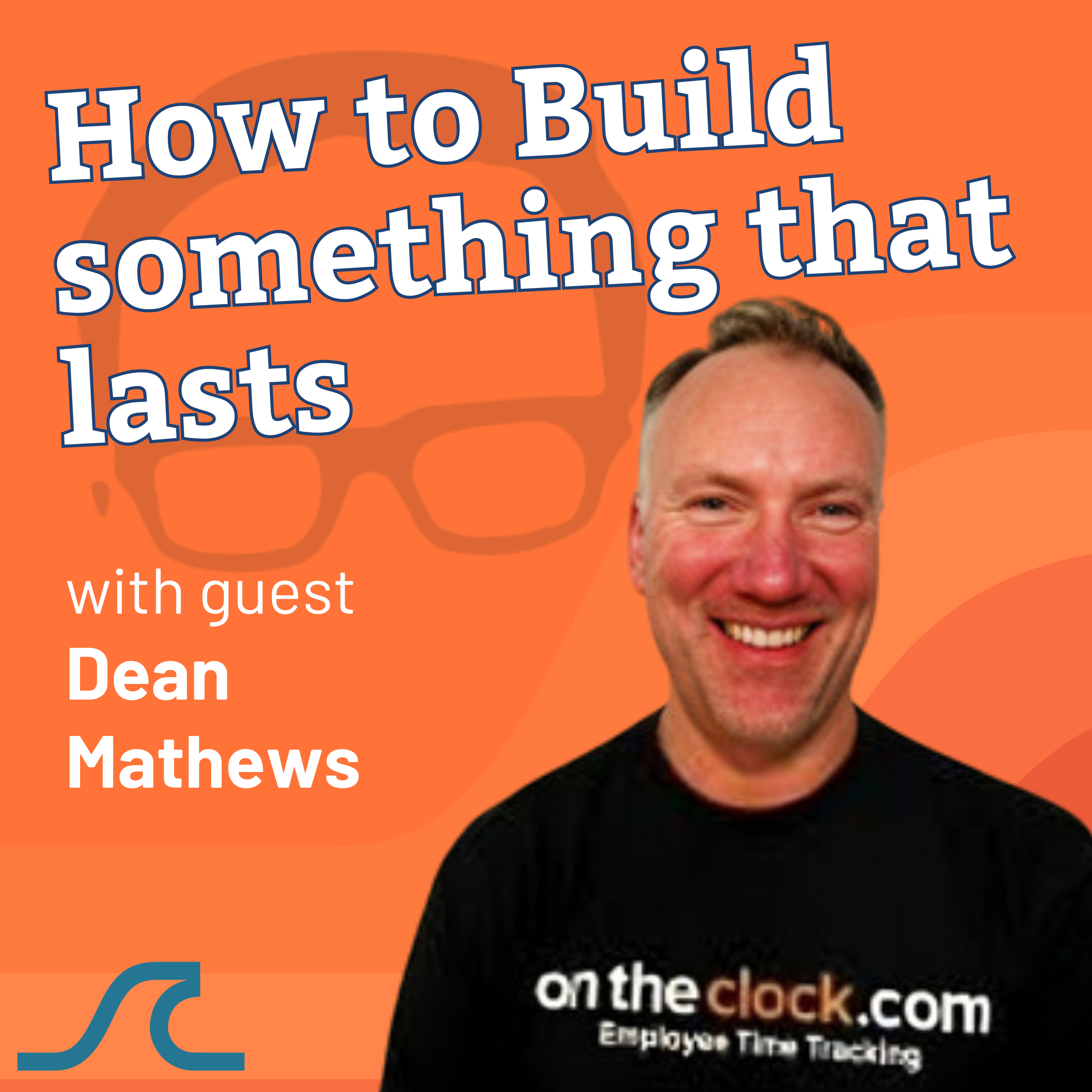
Dean Mathews built OnTheClock to 200,000 monthly users and $5 million in revenue by solving a simple problem he spotted in accounting forums: small businesses needed reliable online time tracking. Twenty years later, he argues the company's growth came from three decisions most founders resist. He refused to scale until he could delegate without micromanaging. He invested years learning to move fast between marketing, product, and support before hiring his first leadership team. And he committed to building a people-first culture after watching too many businesses treat employees as interchangeable parts.
Dean stayed solo for over a decade, wearing every hat from engineering to customer support, because he knew nobody could match his speed. That changed when he brought on his brother as CFO and began hiring director-level leaders who could run the business without him. He admits the accountant marketplace he launched seven or eight years ago failed because he tried to scale it alone, without dedicated people to serve that audience. The lesson stuck. When he had to step away for two months earlier this year, the team kept the numbers climbing without him.
Now Dean is building a sales team to move upmarket, adding payroll and scheduling to create a full HR stack for small businesses. He still works nights, still listens to podcasts constantly, and still commits to family time by getting himself on the hook with promises he refuses to break. He does not believe in work-life balance. He calls it work-life harmony, and he protects it by making commitments he will not walk away from.
Key takeaways
- If you want to scale far, you have to let go of the belief that nobody can do it as well as you can.
- Build scrappy at first, but only if you can scale quickly once you prove the model works.
- Make commitments to family and friends the same way you make commitments at work, then refuse to break them.
- Test your infrastructure under stress before you launch, because simulations reveal problems real workloads will make catastrophic.
- Hire people who can run the business without you before you think you need them, or you will bottleneck your own growth.
Guest
Dean Mathews is the founder of OnTheClock, a time tracking and payroll platform serving over 16,000 companies and 200,000 monthly users. He bootstrapped the company starting in 2004 and built it to $5 million in revenue with a team of 22. ontheclock.com
In this episode
- 00:00Introduction and busy habits
- 03:13Spotting the time tracking problem in forums
- 06:23Building a people-first company from consulting lessons
- 15:15Learning fast and wearing multiple hats early on
- 17:20The mistake of building an accountant marketplace alone
- 24:24Integrating with payroll systems and building in-house
- 31:24Delegating leadership and stepping away for two months
- 38:00Building a sales team to move upmarket
Read the full transcript
Introduction and busy habits
00:00Bill Gallagher: Have you ever had a week when you're completely slammed, but somehow nothing actually moved? Is this one of those weeks? That's not really a time problem. It's a busyness habit problem. My new book, Busy Is Broken: Do Less, Scale More, is all about growing by doing less, not more. Read or listen to a sample chapter over at busyisbroken.com. That's busyisbroken.com. It's also on Amazon and other booksellers.
00:34Bill Gallagher: I love these kinds of shows. We're talking today, we're sharing a story about a bootstrapped company and how it grew and what they learned along the way. And every time I hear these stories, I'm reminded of things from my own journey, also things that are of importance, matter to clients like you. So listen in for the things that you hear in your world that you can hear from their story that opens up something, that reveals a blind spot, that gives you access to something that you've been struggling with.
01:05Bill Gallagher: Everybody, I'm Bill Gallagher, Scaling Coach and host of the Scaling Up Business Podcast. Weekly, our show comes to you weekly. We bring you a CEO, an entrepreneur, a guru, a guest, an author, somebody out there, and then I also share some stories, that kind of thing in the off weeks. And that's the show. You'll find all those shows and more wherever you're getting this right now, or you can go to scalingcoach.com. If you go to scalingcoach.com, you can sign up for our monthly workshops. We've moved the next few workshops to in-person. We're seeing how much people like those versus Zoom. It gives quite an appetite, but you'll find registration for our monthly workshops there, in San Francisco mostly. You'll find all those and more at scalingcoach.com. You'll also find our Growth Navigator program, coaching options, things like that at scalingcoach.com.
01:57Bill Gallagher: All right, listen, Dean Mathews is on with me today. Not Dave Matthews, Dean Mathews, with one T. Got it, thank you. Dean is founder of a company that does time tracking and payroll and stuff like that, scheduling for people. You got staff, you need to schedule them. We got people like that. People running gyms, people running restaurants, people running construction, that kind of thing, in our world, people operating clinics. So he's the founder of this company, started back in 2004. It's called OnTheClock. He bootstrapped this company, and it's a company that's very relatable to many of you. It's a $5 million company with 22 people. It's not a massive multi-thousand-person company. We love those, but what are the lessons we can learn along the way? How do you bootstrap a business like that? They now serve more than 16,000 companies around the world. I want to say north of 150,000 users in the system. So it's running out there. So useful, right, to think about that kind of thing. Dean, welcome to the show.
03:07Dean Mathews: Hey, thanks for having me, Bill. Much appreciated.
03:10Bill Gallagher: Well, let's go back. Since we're sharing, this is a sharing kind of a journey episode. Take us back, 2004. I don't know, you're around the kitchen table or whatever. What did you see? What was the conversation? Tell us about the thing that led you to begin this mess.
Spotting the time tracking problem in forums
03:32Dean Mathews: Sure, yeah, the kitchen table story. So I'm a nerd, right? So it was probably late 2003. I was sitting at the kitchen table and I was looking at my laptop, and I'm a nerd. I'm looking through accounting forums. Remember those, the forums with the posts and everything, small business forums? And just started noticing this trend. These small business owners and accountants, they were basically complaining that there was no online, reliable, and easy-to-use time tracking system with scheduling and such. So I'm a software engineer as well as an entrepreneur. So I said, I'm going to build that for them. And literally the next day, started researching and building it. And probably about three or four months later, OnTheClock went live. And yeah, that's the founding story. I just saw a bunch of posts and decided I was going to fix their problem. And here we are, sitting at 16,000 customers. There's 22 of us, and yeah, we solved their problem.
04:35Bill Gallagher: What made you think that you should get into that, that you could get into that? What was the background? Had you done some other companies? You said you're a nerd. Had you just been doing that? When did you become a first-time entrepreneur? Is it this business or something before?
04:52Dean Mathews: No, no. I've had a few others in the past too. So like serial entrepreneur, I guess they call it. I had several other businesses, mostly like online stuff, did some local consulting here in the Detroit area. And that was great. Met a lot of great people and still know a lot of them today. Some of them are actually still my clients for the time tracking now. But where it started, I was not… I come from no time and attendance, no scheduling background, but I knew I could figure it out. So I noticed there was a problem and I knew that I could provide a solution. So just went for it. And it was really a passion project at the time. I didn't… I'm not going to say I didn't expect it to turn into… I didn't expect it to turn into what it did today. But just really thought I'd build something, I'm trying to help people, and it's actually closer to 200,000 people a month we help now.
05:54Bill Gallagher: Yeah. That's a handful of users in the system, right? A handful.
06:00Dean Mathews: Yeah, a few. Couple people.
06:00Bill Gallagher: Yeah, more than I can say good morning to.
06:05Bill Gallagher: So who was the first person that you got engaged with? Was it a customer? Was it a collaborator? Was it a salesperson, a tech person? Like, who did you first bring into the effort, and how did the people chain grow?
Building a people-first company from consulting lessons
06:23Dean Mathews: So it would be… For them, I still remember their name. It's Farrell Hair. They did hair replacement. I think they're down in Florida. They're, as of last year, they were still with us. So they've been through lots of iterations of OnTheClock. And I believe they were actually sign-up number like five or six. And I reached out to them back then. I reached out to a lot of customers as they signed up because it was only a few a day. So that was pretty interesting. And just started talking with them and they had lots of good ideas, and started building some of those ideas and started talking to more customers and more customers and just started collecting what they were looking for and just started building that into the product.
07:11Bill Gallagher: So they were an early beta user, they got to help you with the development. What about team? How did your team grow?
07:19Dean Mathews: So the team… So here's a funny story. Back even when I started OnTheClock, I was a computer consultant, a software consultant. So I had these couple dozen customers here in Metro Detroit, and I had a really unique perspective on business. I was younger, late twenties, early thirties, and I would work with the people upfront, CEOs, CFOs, and talk about the software. This was not the time tracking. I'd build whatever they needed: inventory control, MRP systems, accounting systems, whatever they needed. And I'd work with the people upfront and get their requirements, figure out what they needed. I'd go build it, and then part of it was then installing it and setting it up on people's computers. And I would talk to people out back, anywhere from the floor sweeper to a machine operator or whoever it might be. And I started… over this is over a decade or so, I started seeing this pattern where the people upfront kind of…
08:27Dean Mathews: Didn't like the people out back, thought they just were there for the paycheck and they're always late. People out back, same thing. People up front are always golfing, they don't do any work. There was always like this fighting. And I had built this idea that I never wanted people. I didn't want a team, right? And just kind of stuck with me, just for a minute though, thank God. But I decided for myself that if I'm ever going to do something and have a team, that I was going to do it differently. And that was really a guiding light, you know. We, OnTheClock, there's 22 of us, soon to be 23, 24 here in the next month or so. And really, it's just a people first mentality. You know, passion for people is one of our values. And it really, it could come, values come from me, a lot of them do at least. But building the team was and now is my primary job, right? So I don't quote unquote work anymore. I just help other people do their work. Yes, I still work, but you know, as a leader, CEO, you know, you're the one that really helps to organise people, helps to set the vision, build the culture, set the values, get everybody aligned to one big target or maybe one or two big targets, and just keep everybody encouraged and keep everybody focused on the vision and just levelling them up. I love seeing people's careers advancing, and we've had several people move up through our company, two, three, four, you know, levels. And I love seeing that. It's so awesome.
10:01Bill Gallagher: What sort of person was your first hire or contractor? What role did you first fill?
10:10Dean Mathews: So that would have been our support, like customer support, somebody to answer the phone, field the calls for the customers. That was Samantha. She's still with us. She has moved up three or four. She is now product owner. So she's moved from customer support, moved into CS, customer success, and had several iterations, and now she is what we call product owner. So she works on the product team, the people that build the product, build OnTheClock, what customers use, the phone app and the website.
10:41Bill Gallagher: Yep. And then when do you have someone like a COO or head of operations now?
10:49Dean Mathews: So currently, the closest person we have to that would be Amanda, and she works in operations. Mark is our CFO and VP. So those two roles would fill what you're talking about there. So they definitely work with me and complement me in my job.
11:09Bill Gallagher: How long before you hired them? And how did you go about finding them, or did you hire somebody before that didn't work out?
11:18Dean Mathews: Yeah. So Mark came on board about nine-ish years ago. Mark's my brother, and he came on board as a partner. So when I say, he wasn't an employee, we ended up teaming up and approaching this together. So he took a share in the company. And so he was about nine years ago. And then Amanda, who is our operations person, she's been there, what, three years now or so? So yeah, those two people are really, really provide the lifeblood to the system. You know, I'm big ideas, big vision, you know, trying to get bigger things done. I struggle a little bit with the day to day stuff, so that's where I need a little help. And they help tremendously.
12:06Bill Gallagher: But you took quite a few years before you hired that, like more than ten years it sounds like, before you hired somebody to take over a—
12:16Dean Mathews: That was, I had a hard time delegating, we'll say, right? So I went from doing everything, like literally everything. Writing the code, doing the marketing, doing the support, you know, everything. And that's one key to leadership is bringing the right people in place that are not only capable of doing the job that you can trust, and people that will work with you and complement you. So really at this point, and I'd say realistically only the last few years, have we had a real team of director level people built out. So now I am able to do what I really need to do from a CEO role, and that's really pay attention to the customer, pay attention to competitors, take care of our team, build the team, make sure the product is going in the right direction.
13:10Bill Gallagher: What do you think has been your personal struggle with delegation? What was the hardest part of that for you? Trusting people, being afraid of stuff, being a perfectionist? What do you think is like the personal battle around delegating?
13:28Dean Mathews: It's, so nobody can do it as good as you, right? I mean, that's, or at least that's what we think. So it turns out that's not actually correct, but that was kind of a philosophy that I went under for a while. So really releasing the reins and letting other people do the things that I used to do was probably the biggest struggle. I think a lot of leaders struggle with that. It's trusting other people with your baby, right? So, but the reality is, and this actually goes back to one of my favourite quotes, is that if you want to go fast, go alone. If you want to go far, go together. So you can't, you can't scale a business very far by yourself. So, you know, bringing these people, these key people in, which I believe I have a really full set of about five, six key people right now, is a huge, huge asset to myself, our product, our organisation as a whole.
14:36Bill Gallagher: You, what would you say was your biggest break early on? Like where did you get lucky and have something that helped you to get some momentum?
14:50Dean Mathews: You know, I'd say biggest break, I'd say it really is the ability to move very quickly on my own in the very beginning for those first, you know, eight, nine, ten years. So, you know, when you're by yourself you can move really quickly, right? And so I probably most likely have ADHD or something like that. So I could move from one thing to another to another and seamlessly go from marketing to writing product to doing customer support to doing sales. And I could do all these things. So, you know, I really consider that a gift. The ability to not multitask, but really move from one thing to another and just really, I, the other thing is like, I'm super passionate about things. I love learning. So I learned things really quick. I would just dive deep and do whatever it was that I needed to learn how to do. And I learned it and then I implemented it, and, you know, it came out wonderfully.
Learning fast and wearing multiple hats early on
15:51Bill Gallagher: So yeah. Well, in the beginning with your sales and marketing, where did your sales and marketing click in the beginning? What, how did you get your early customers?
16:01Dean Mathews: Yeah. So we haven't really had a sales team up until just recently. We're actually building a sales team right now. But marketing, definitely knew that marketing was something that we were going to need to do. Being web-based at the time, you know, there weren't any apps back in the day. Really focused on SEO a lot. So really studied up on that, understanding how to properly build websites. So the Googles, the Bings, or you know, whatever they were called back then, were able to find you. And on top of that, you know, just building a really great product that people recommend to their friends and their new companies as they, as employees, move from one company to another. So, you know, word of mouth is the best form of marketing, right?
16:51Bill Gallagher: Your, I mean, it sounds like you just did a lot of online things. There wasn't a particular account or an association or affiliation or something that brought it for you.
16:53Dean Mathews: No. No. We're very industry agnostic.
17:06Dean Mathews: So we're really built for really any company, anywhere from construction to insurance offices, warehousing, trucking companies. You know, we really run the gamut there.
The mistake of building an accountant marketplace alone
17:20Bill Gallagher: So what about do-overs? What are the mistakes that you made hiring people, financing things, technology? Like, if you could go back and redo it, where did you falter, make a mistake? What do you wish you could do over if you could?
17:38Dean Mathews: Yeah, that's a good one. We haven't had any, or I haven't had, if I'm going back, you know, 10 years or so, any real major hiccups. I would probably say this is more from an engineering standpoint, from the way we built the product. There was a couple things that I did in the very beginning, like 20 years ago, from an engineering, the way we coded the product, if you will. I'm trying not to get too technical here, but things that I did setting up the code, the source code, if you will, that I kind of wish I would have changed. It was more of an antiquated way of doing it. It was okay back then, but now that we're, you know, we have a goal of of serving a million people, right? A million concurrent people, MAU, monthly active users we call it. So we're almost at 20% now. We're closing in on it. So, you know, building things 20 years ago, you wasn't thinking of scale the way we are now. So now we're having to go back and re-engineer things, and I wouldn't say it's a major upgrade, I guess you might say. So we're just going through now. We just finished, I should say, what we were calling B2 internally. So our platform was based on programming techniques from 20 years ago when it was cool back then, but nowadays it's not. So we just had to really go through and upgrade the entire tech stack. Website is done, app is done. We'll be done in about a month. So everything will be up to par, up to grade and ready for a million users.
19:14Bill Gallagher: And you're doing the front end before you're doing the back end?
19:19Dean Mathews: No, we're actually doing them somewhat in parallel.
19:22Bill Gallagher: Oh, interesting. It's funny. So I had a SaaS business in the late nineties, early 2000s, and we shut it down in 2002. But when we built the thing, and part of the way that we got funding is right from the beginning, we built the architecture to handle a million transactions in one hour. So we're like, how do we get a million things through the system and build the system that can handle that? So we had to run a simulation and of course, we created on a remote hosting architecture. We weren't yet really cloud thinking. It was remote servers, but there was a way to scale the servers in those days. And that was like, we did some stress tests and simulations. Because we wanted to say, great, how could we run a Super Bowl ad and then take all the orders in the hour, you know?
20:22Dean Mathews: Yeah. Yeah. We do some of that here internally on some of the high frequency areas of the site and app.
20:30Bill Gallagher: So yeah. I would think that, like, thinking about that architecturally, where do we want to go? And the balance of it, like, so we didn't buy or turn on servers for a million because we had only a handful of customers in the beginning. We thought about the fundamental structure of it that would let us get there without redoing things. Right?
20:51Dean Mathews: Yeah. And I think, you know, if you do your research and you can simulate to some degree actual user activity, but you never really know until it happens, right? Simulations are very different than an actual workload. So, but they come close and it's a good approximation and it's always a good test to have. So, yeah, we had built up, did a major upgrade a couple years back. Not to get technical, but it's like on our sign-in page, if you will. We moved over some of our security features over to a new technology and we had not yet stress tested it. So a couple days before we were to launch, I'm like, hey, guys. We gotta stress test this. And we stress tested it and, you know, God willing, we did because as soon as we stress tested it, the whole thing just crashed. So luckily, we did it just like you were saying, you know, we had we had all these computers simulating people and they were all trying to log in at the same time. But good news was is just with a couple small tweaks, we got the performance right up to par and we were ready to go. So but that's, you know, testing made a difference there.
22:05Bill Gallagher: What else didn't work? When you think about business partners, sales and marketing, websites, partners, advertising, what are the things that didn't work that you thought might work?
22:17Dean Mathews: Yeah, I'd say one thing that didn't work. We had, this was probably seven or eight years ago. We created, when I say we it was mostly me at that time, what we called an accountant marketplace where we, what we did build, it was like a web page and kind of some infrastructure to support accountants and CPAs. And we built out the technology, the infrastructure, and I'd say it was about 70% built out. I'm a big proponent of be scrappy, but be scrappy with the ability to scale quickly thereafter. And the reality is is I really underestimated the amount of time and energy and I really should have had one or two dedicated people to that program. But again, like, I was just, a lot of it was just me at the time and there might have been four or five of us total at the office. But it was me trying to run that operation, that program, while I'm wearing all the other 10 hats, right? So that is a definitely a lesson I learned is that when you're trying to do something big, especially when you're trying to serve a crowd like CPAs and accountants, right? Those guys and ladies, you know, they have high expectations and we didn't really put the human capital behind it to really give them the best experience. And, you know, we actually had quite a few accountants really asking us, well, what about this? But we just weren't prepared to actually scale that. So we actually ended up pulling it down a few years later. And that would probably be a pretty good example of a place, but it was, I was a little more naive back then, you know? Now, understanding things a little bit better, I would have had a team behind it. You know, it's, yeah, I'm very much about product-led, not having a bunch of people having to support something. But as you scale, there's definitely a time where you need to bring people in and have actual one-to-one relationships, you know, people-to-people relationships. And that is one place where that was needed.
Integrating with payroll systems and building in-house
24:32Bill Gallagher: When, so you're integrated with payroll, your ADP, QuickBooks, Gusto, like that kind of thing. How has that gone being able to integrate with everybody? Was it easy? Was it hard? Were there some that were easier or harder than others? Tell us about, like, becoming part of an ecosystem.
24:56Dean Mathews: Sure, absolutely. So you definitely hit on something there. So the primary product is time tracking. So clock in, clock out for employees. At the end result, you end up with a time card, basically. What do you do with time cards? You pay your people on it. So the very next step in time tracking is payroll. So we recognized that early. So we had some basic reporting built in. But over the years, we built integrations. Some were direct integrations where, you know, you connect your accounts, you just hit the button, hours go over.
25:30Dean Mathews: You log in to your ADP or your QuickBooks or Gusto and then you run your payroll. Most of them were pretty straightforward and they follow a relatively common pattern as far as integration. One of the bigger ones, they had a lot more stringent—I can't name a whole lot of names here—but a lot more stringent qualifications to get into the program. And we put a lot of effort and work into it. And it actually yielded a little not quite the results we wanted, just from a result standpoint, I guess you might say. It's still up and functioning, but it's one of those, I'm not gonna say it was a mistake by any means. But we've really shifted gears a lot to, turn of this year, we actually built payroll right into our system. So you don't even have to leave On the Clock anymore to run payroll. So, you know, we recognized this several years ago and started heading in that direction. And I'm not saying, you know, our customers absolutely have choice as to where they want to run payroll. So we'll still continue to support integrations, still build new integrations with additional payroll systems. But really, the customer gets a much more seamless, easier, more cost-effective solution if they just run payroll right inside of their account here with us, with On the Clock. And so we're actually gearing a lot more towards that nowadays.
27:02Bill Gallagher: It's interesting. I remember running through a company called ADP for decades and decades, and they were the big one. And then they had so many ways of interacting with them. They were a variety of interfaces and types, probably the one that they were least good at were the smaller companies. Smaller mid-market companies was not really what they catered to. They wanted the big enterprise and the bigger end of mid-market. And they had a thing, but it was still kind of expensive. And then I remember, I think the first play, I think we switched direct to Gusto. It was like, oh, this doesn't have to be so hard or so expensive. And I was really impressed with how what a pleasure they were as a company and how easy it was by comparison. And they just simplified the historical stuff. But of course, they didn't have the legacy and all the other stuff that ADP would have. And then by the time, like, QuickBooks Online tried to pitch us their payroll, I'm like, yeah, we're already set. Like, you know, I didn't have the pain of a thing in the same way, so harder to win over. But it's always fascinating to see the players with the big installed bases and things like that. Right? And then I can remember also years ago, several occasions where we did business with different marketplace partners, and one of them was Amazon. And Amazon has some unusual technology behind the scenes of their world. And I'm like, Billy, we have to write flat files in this way and then send them back and forth and format all these things like some weird EDI transaction. And it was all kinds of obtuse and odd.
28:50Dean Mathews: Hodgepodge of things. And they were like, yeah, do it our way or go to hell. Oh, it's still like that. There's not a lot has changed with a lot of these legacy payroll systems. You know, you were talking about ADP and a lot of the big names out there. Yes, they have two, three, four, five different systems because what they've done over the years, they've acquired smaller companies, bought companies, customer base. Yeah. And so, you know, the big players might have four to five different offerings, and depending on where you're at, you may end up with offering A, B, or C. And yes, so it's a very disconnected user experience, you might say. Whereas Gusto, for instance, you know, they built it from the ground up. They just went out and hired the best payroll people. They built their technology from the ground up. They listened to their customers. They were very well funded, which helps. And, you know, now they are really one of the rising players in payroll.
29:55Bill Gallagher: They really are. And I know you have an integrated offering and that kind of thing. But I could tell from the beginning that they were probably a really good company because every touch point was kind of a pleasure. Like, they didn't piss us off at any point.
30:15Dean Mathews: That's always a really good tactic, right? Don't upset your customer. But they're all engineers though, right? So, you know, well, this is years ago now, but I was following the way they were doing marketing and they brought engineers who had little marketing experience into marketing and they applied their marketing or their engineering background to marketing, for instance. Same thing with product. Not just building the product but building the way that the product works. So, you know, they did a really good job building Gusto and they listened to their customer. That's the biggest thing, right? So they had a set of early adopters and they got their feedback early and they adjusted the product on the fly, basically. Very similar to what we did. You know, we listened to the customer and we adjusted the product back when it was just me. We could adjust that product in like three days. You know, it was pretty amazing. But now we're adjusting product like every two weeks. So, you know, we're still at a really good pace and a really good rhythm with that.
Delegating leadership and stepping away for two months
31:24Bill Gallagher: You mentioned, I like to flip it a little bit personally. You talked a little bit about the struggle to delegate, to learn to trust. I'm curious about the intersection of the evolution of your leadership style and then your personal habits. So how has your protecting your time for family, relationship, hobbies, fitness, friends, things like that? How has that changed over the last twenty years and how has your leadership changed along with it? Take us through whatever you're willing to share about evolution of your leadership and then what your personal life looks like.
32:04Dean Mathews: Sure. Absolutely. So, you know, you hear the phrase work-life balance. I don't really know what that is. You know, I call it more like a work-life harmony. I never really turn off. You know, I could be working at 10:00 at night. It's just the way it is. So, and it's just the way my brain works. So, I but I definitely allocate time for personal family, friends, of course, right? I mean, my family is important to me. My wife and kids, they need my time and I love spending time with them. So I have to sometimes, you know, really just say, okay, this evening, we're going to do this and what I do is I kind of get myself on the hook a lot. I'll commit to it, right? Because once you've committed, it's really hard to back out. And I do that intentionally. So I make sure that I'm actually serving all the areas of my life the way I need to. So, but it is a challenge, you know, when you're driven and you have a project at work, like a whole company for instance, you know, it's always on your mind. You know, I love it. I love working, you know? So it's hard to turn that switch off sometimes. So, you know, your work is play, you know, it's hard to not want to play.
33:30Bill Gallagher: How long can you get away for without having to be involved in calls, emails, and things like that? How long can you get a vacation for today?
33:40Dean Mathews: So could I get or could I want? Or could I, you mean, like, as if I had to leave?
33:49Bill Gallagher: Wanted to. Yep.
33:51Dean Mathews: Yep. I had a situation earlier this year where I had to for some personal matters take some time off. It was actually a couple months.
34:00Dean Mathews: It was rather unexpected, and to my not surprised because I knew our people and our team was equipped to do this. I was able to effectively leave work for several months and everybody just kept doing their job. The numbers stayed up into the right. Everybody knew exactly what to do, but that's a testament to my team, right? Putting the right people in the right places that can work and communicate with each other and get the job done without a boss being there twenty four seven is a major testament to your people, the team. So, you know, they really did an amazing job while I was out.
34:50Bill Gallagher: Talking to us then, it's a natural segue into the kind of culture. What does it look like? Do you have people in the office, out of the office, hybrid? What kind of hours? What kind of policies? What does it look like in reality?
35:04Dean Mathews: Yeah, so we are hybrid. We're in two days a week, Tuesdays and Thursdays. Hours are pretty typical, eight to five, eight to five thirty. Generally, almost all of us are in Tuesdays and Thursdays unless somebody's off sick or something like that. Then the regular work schedule, you know, Monday through Friday for the rest of it. And, you know, it's pretty common for a few of us to touch base in the evening here and there. If somebody's got something they're working on, I don't mind if anybody pings me later in the evening. You know, I'm usually around. I've probably got work on my mind. So that's kind of our work schedule. You know, culture wise, like I said, like I mentioned earlier, really didn't want to have that corporate structure to the best of my ability. So we, I've heard the word kind of family like a lot. So, we have a pretty good, and not a pretty good, we have an amazing team. Our turnover is basically zero for the most part. People come and work and stay with us. So, that's a testament to the amazing people and the great culture that, you know, not so much I, I mean, I just help set it off but it's the people that maintain it, right? So, you know, that family oriented culture and just empowering people to do their best work, you know, not micromanaging. I am not a micromanager. I do not want to micromanage. I just want to be able to set the high level goals for people and then whatever they need along the way to reach those goals, be there for them. That's my goal, you know, as the CEO.
36:53Bill Gallagher: What sort of coaching, training, teaching, peer groups, masterminds, things like that have you used?
36:59Dean Mathews: For myself, I am pretty much self taught. I had taken a few classes here and there, but I'm an avid reader or listener, I should say. I listen to audiobooks pretty much constantly. Podcasts are, you know, you're now on my list. Definitely am a podcast listener. I have a pretty good network of business friends that I'm always bouncing ideas off and the people at work, you know, my director level people, you know, they are all very skilled at their craft. So, we can do the iron sharpens iron thing if we're talking about marketing or CS or product or whatever it might be. I can work with them and we just sharpen each other. So, and there's definitely been a few peer groups here and there that I've been a part of. So, those are always really exciting.
Building a sales team to move upmarket
38:00Bill Gallagher: So where are you going from here? What are you building? What's your goal? Ten years or more out? When will you exit this business? Talk to us about the future.
38:10Dean Mathews: Sure. So we have the we have the million user goal. So, currently, our product has time tracking is really the core product that holds everything together. We have payroll now. Payroll was put in, built in earlier this year of January first ish. Scheduling, employee scheduling, shift scheduling, that has been, we've had scheduling for seven or eight years but it's about to go under a major overhaul to where we're really upgrading it, bringing it up to a more modern standard. That is coming into play Q4, Q1, Q2 of twenty six. And then after that, I'm internally labeling them like HR light type features. These are things like employee directories, document centers, you know, hiring, meeting notes, all the things that a small business. The idea is to build up a suite of tools that any small business can take and kind of run their people on, run their HR if you will, department. So, just to build that suite of tools that can run that people stack. That's the goal. And to reach that million monthly active users we call it. So, you know, we're about 18% of the way there. But we're clicking up every month just a little bit. As far as, you know, exiting, I'm having a great time doing this. I'm loving my job, loving working with the people, loving to build the team. I really have no plans to exit. I mean, at some point, it's gonna happen. I don't know when. You know, the time will time will tell. You know, we'll just see.
39:57Bill Gallagher: So not clear. Alright. What do you most need next for the next stage of your journey? What do you think you most need next?
40:06Dean Mathews: Most need next. That's a really good question. I would say, well, if I'm just looking at the company as a whole, one of the things we're actually building right now is a sales motion, right? We have been traditionally product led. So, and that's just the way I built the system or we built the system over the last two decades really. But we're at a point now bringing on payroll, moving up market a bit to where we're moving away, we're SMB but moving more into the Ms and maybe even a little bit on the enterprise side. That is a real sales led motion to where we need people to actually help sell the product. The product led doesn't work much past that 50 to 100 employee mark with companies that we serve. So, building that sales team, we literally were just in an interview this morning. And actually bringing the leader in to build that team is what it really is that we're doing right now. That is the one missing piece we have right now. So, finding that right leader to come in and that can be the smartest person in the room I call them at building that business development and sales team. So, that's the biggest or the biggest thing we've identified that we need right now. And then after that, it's really just some of those other product enhancements that I was talking about just a few minutes ago.
41:39Bill Gallagher: Nice. So the company OnTheClock, ontheclock.com, where you, we'll find, throw that up on the thing. There's the email. But you could just put the URL on there.
41:53Dean Mathews: Yep. Ontheclock.com.
41:56Bill Gallagher: Of course, we are scalingcoach.com, and you'll find us there, all the back catalog, our monthly workshops, coaching programs, things like that. Dean Mathews, it's been a pleasure talking to you today. Thanks so much for joining us, for having the conversation.
42:14Dean Mathews: Thank you so much, Bill, for having me and let me just put a plug in for the Scaling Up Podcast. I'm a recent new listener but you guys have some great content. I would highly recommend it to anybody listening to this podcast and just hit that subscribe button. Bill and his show is awesome. Top notch.
42:31Bill Gallagher: Thank you. Thank you, Dean. Thank you to Anna and Wanda for producing our show every week, for getting it out. Thank you all for watching, for listening. Until next time, keep scaling.
42:40Dean Mathews: Thank you.
42:44Bill Gallagher: Thanks for listening today. One last thing. If anything in this episode hit home, my book digs into it further. Busy Is Broken: Do Less, Scale More. It's all about how to stop drowning in work and build a business and a team that scales without you. Available right now with content samples at busyisbroken.com. Go grab it. Be less busy.
Bill Gallagher coaches CEOs and leadership teams on the Scaling Up framework. If something in this episode landed close to home, the free 20-question diagnostic is a good place to start.